
Outer-system flight time depends heavily on launch energy, planetary alignment and gravity assists.
Complete world information
Uranus
Distant, quiet and still comparatively under-explored.
Scientific status
No exoplanet is confirmed habitable or inhabited. Habitable-zone position only means that liquid surface water could be possible under the right atmospheric conditions. Rate the Earth percentages are editorial comparison scores, not scientific probabilities.
Rate the Earth habitability percentages are editorial comparison scores, not scientific proof of habitability or life.NASA / Voyager 2Ice giant portrait
Rate the Earth habitability comparison1%
Not naturally habitable for humans
Probability of other life1%
Extremely low
Minimum delay for information travelling at light speed.
Approximate send-and-reply delay before processing time.
Voyager 2: Earth launch to Uranus flyby
Image gallery
Uranus observed images and realistic concepts
Real mission or telescope imagery is shown when available; otherwise the closest realistic concept is used and clearly identified.
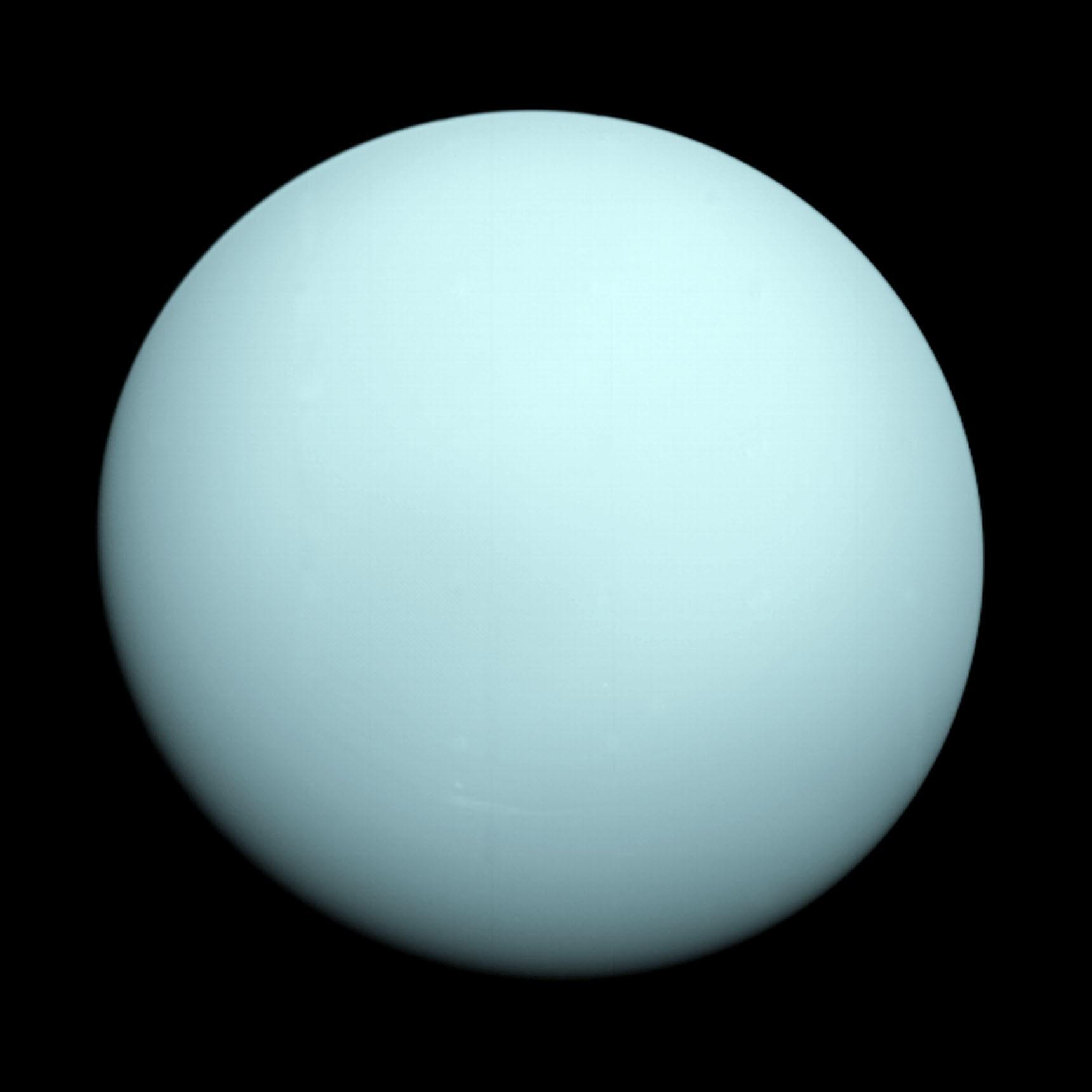
Observed or mission visual
Uranus observed or mission image
The main direct observation, radar map or mission-based visual used for Uranus.
This image is based on direct observation or mission data and is shown before all concepts.Source: NASA Science ↗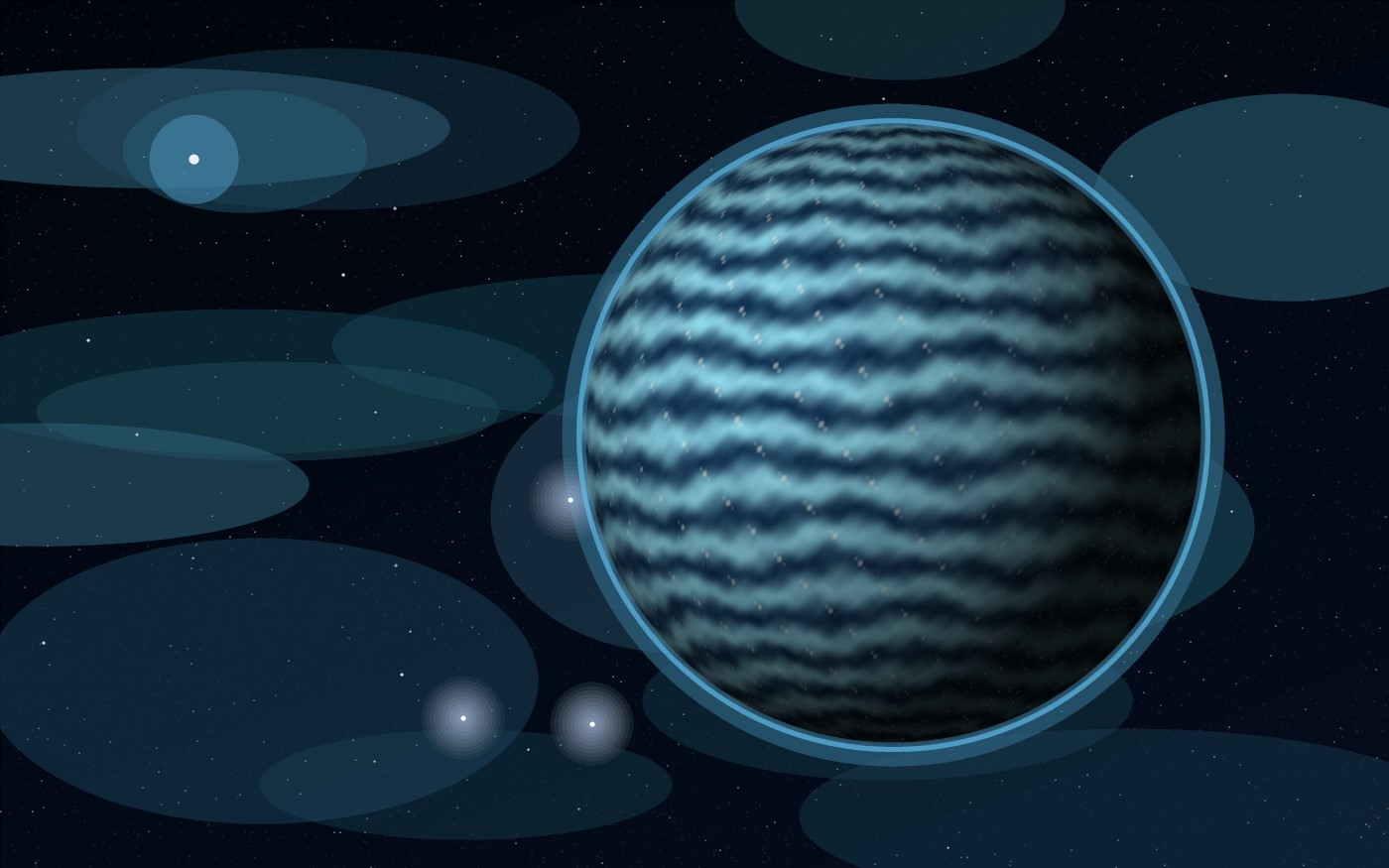
Photorealistic scientific concept
Uranus realistic orbital concept
A high-resolution scientific concept showing how Uranus could plausibly appear from orbit.
This is a realistic companion concept, clearly separated from the observed image.Source: Rate the Earth scientific concept generator ↗
Photorealistic scientific concept
Uranus surface or atmosphere concept
A second realistic interpretation focused on the surface, clouds, atmosphere or horizon of Uranus.
This scene is an editorial scientific visualization, not a claimed photograph.Source: Rate the Earth scientific concept generator ↗Life potential
Could other life exist on Uranus?
Uranus is a cold ice giant with no known stable environment comparable to a life-bearing surface or ocean.
Extremely low
Why this score?
- No conventional solid surface.
- Very cold and high-pressure conditions.
- Limited present-day evidence for habitable chemistry.
Editorial comparison score only.
Complete data sheet
Everything listed for Uranus
Measured values, estimates, discovery information and the main uncertainties are shown together below.
Travel calculation
How long would the journey take?
Straight-line arithmetic is compared with real mission history. Actual trajectories depend on orbital mechanics, acceleration, braking, launch windows and gravity assists.
One-way vacuum light time at the representative distance.
Straight-line arithmetic only; Parker cannot cruise between planets at this speed.
Straight-line comparison before accounting for orbital mechanics.
Straight-line comparison; real missions follow transfer trajectories.
Research guide
What we know, and what we do not know
What is directly known
This body has been observed as a resolved object. Spacecraft and telescopes provide real imagery and direct measurements, although conditions can still vary by location and time.
What remains unknown
Local weather, geology and mission conditions can change, but the body's global size, orbit and broad environment are directly measured.
Environment
Uranus is an ice giant with a methane-tinted atmosphere and no conventional surface.
Habitability outlook
It is a destination for science rather than direct residence.
Appeal
Its unusual tilt and under-studied moon system make it a compelling exploration target.