
The listed value is the approximate present distance from Earth. Interstellar destinations move, but the difference is negligible compared with the enormous journey time at current spacecraft speeds.
Complete world information
TOI-715 b
TOI-715 b is an important TESS target, but a habitable-zone orbit alone does not reveal whether its surface has water or a suitable atmosphere.
Scientific status
No exoplanet is confirmed habitable or inhabited. Habitable-zone position only means that liquid surface water could be possible under the right atmospheric conditions. Rate the Earth percentages are editorial comparison scores, not scientific probabilities.
Rate the Earth habitability percentages are editorial comparison scores, not scientific proof of habitability or life.NASA/JPL-Caltech-inspired artist conceptCool-star super-Earth concept
Rate the Earth habitability comparison59%
Potential candidate — atmosphere and surface unknown
Probability of other life37%
Candidate for simple life
Minimum delay for information travelling at light speed.
Approximate send-and-reply delay before processing time.
No spacecraft has travelled to this system
Image gallery
TOI-715 b observed images and realistic concepts
Real mission or telescope imagery is shown when available; otherwise the closest realistic concept is used and clearly identified.
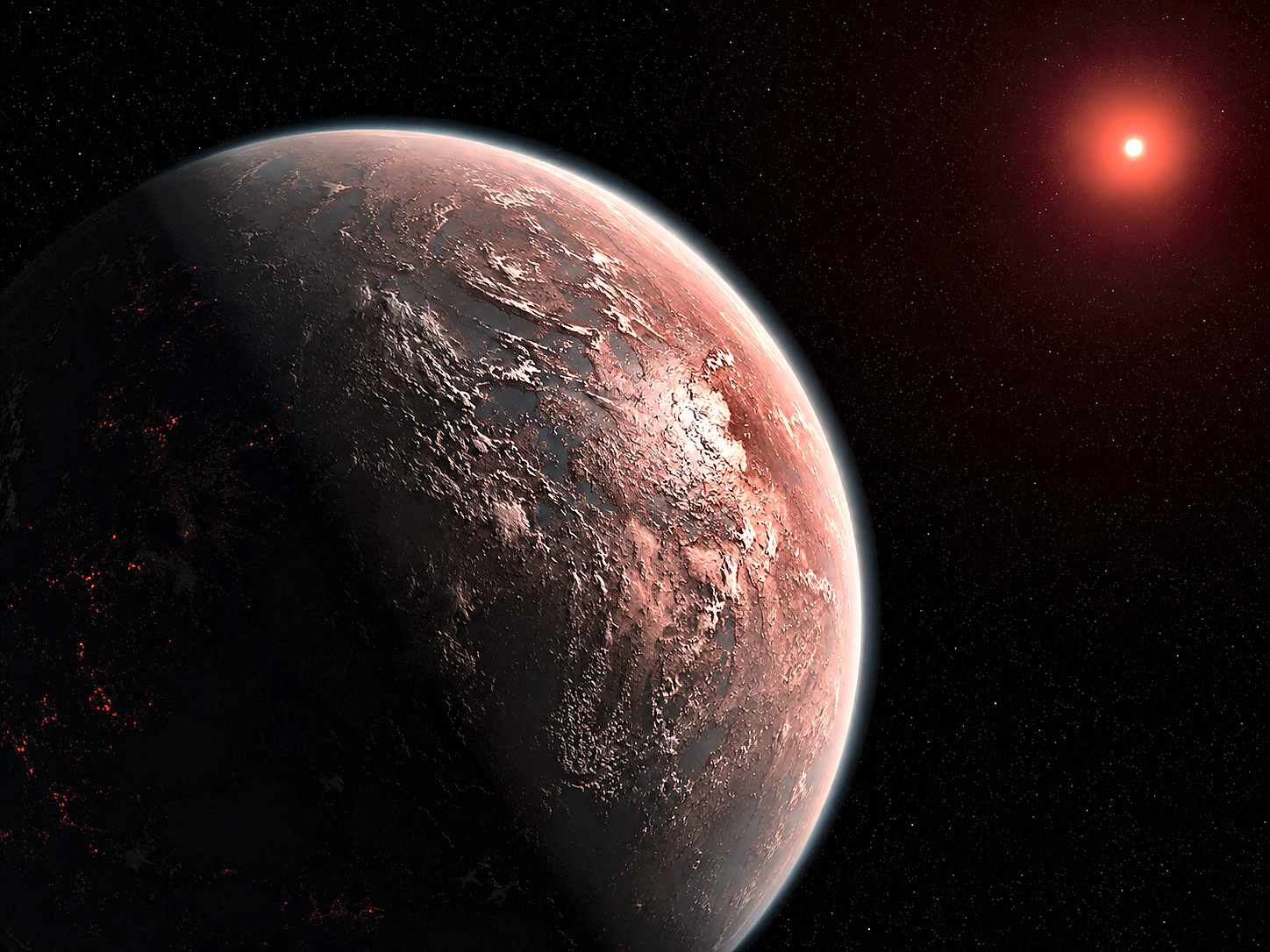
Photorealistic scientific concept
TOI-715 b realistic orbital concept
A high-resolution scientific concept showing how TOI-715 b could plausibly appear from orbit.
No resolved true photograph of this world exists, so the site shows a clearly identified realistic concept.Source: Rate the Earth scientific concept generator ↗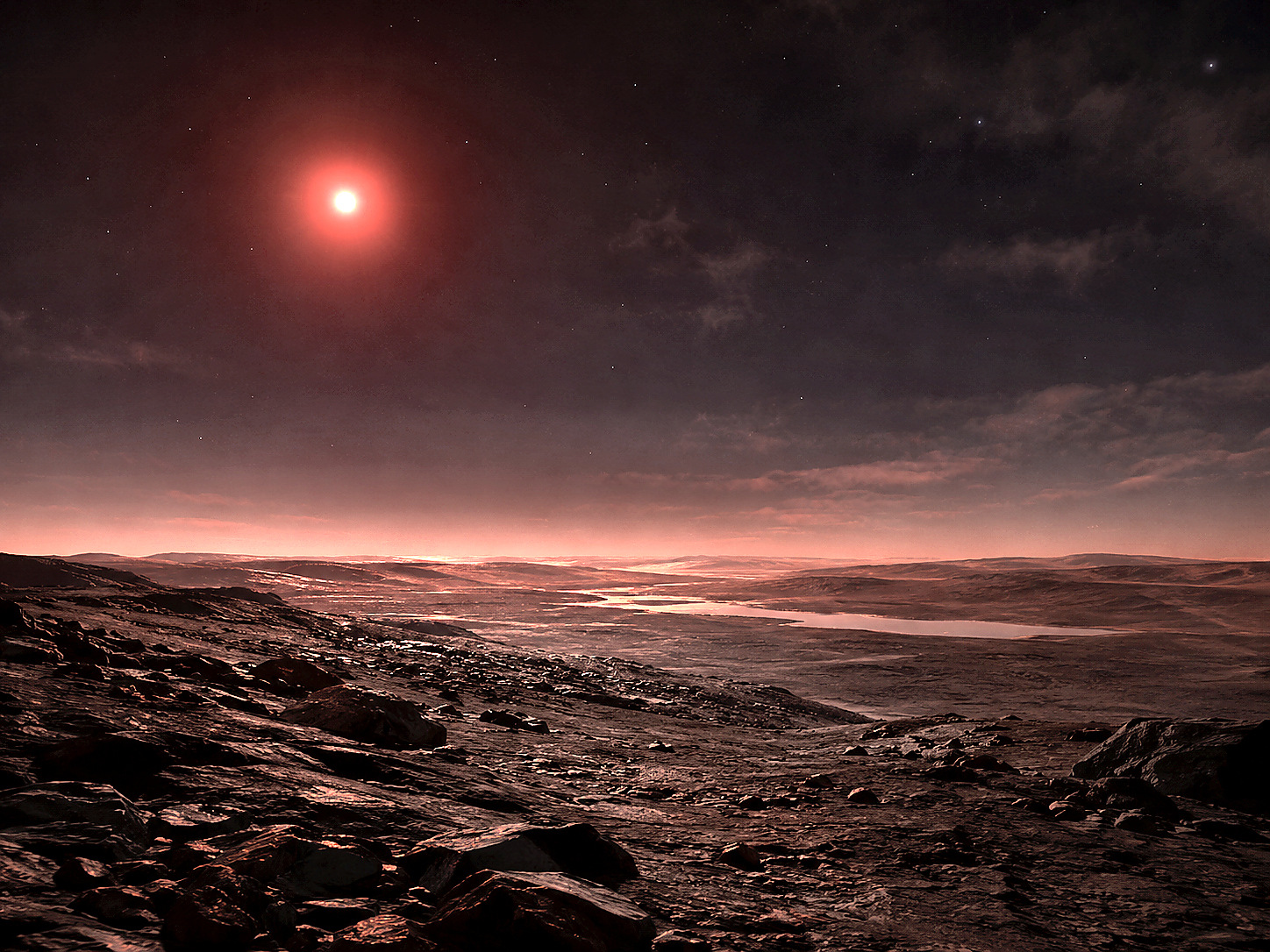
Photorealistic scientific concept
TOI-715 b surface or atmosphere concept
A second realistic interpretation focused on the surface, clouds, atmosphere or horizon of TOI-715 b.
This scene is an editorial scientific visualization, not a claimed photograph.Source: Rate the Earth scientific concept generator ↗Life potential
Could other life exist on TOI-715 b?
TOI-715 b is treated as a potentially habitable candidate, so this site assigns it a moderate editorial probability for simple non-human life.
Candidate for simple life
Why this score?
- Rate the Earth habitability comparison score: 59%.
- Atmosphere clue: Unknown.
- Host-star context: M-type red dwarf.
- The catalog flags this world as a potentially habitable candidate.
This probability is an editorial astrobiology estimate based on public characteristics, not a formal scientific measurement.
Complete data sheet
Everything listed for TOI-715 b
Measured values, estimates, discovery information and the main uncertainties are shown together below.
Travel calculation
How long would the journey take?
Straight-line arithmetic is compared with real mission history. Actual trajectories depend on orbital mechanics, acceleration, braking, launch windows and gravity assists.
A physical reference only. A spacecraft with mass cannot reach light speed.
No operational spacecraft can sustain this interstellar cruise speed.
Still far beyond current spacecraft propulsion.
Parker reaches this speed only very close to the Sun; it is not an interstellar cruise speed.
A comparison using a real high-energy launch from Earth.
A practical comparison with a spacecraft already moving into interstellar space.
Research guide
What we know, and what we do not know
What is directly known
The planet itself is not resolved as a detailed globe. Its existence and properties are inferred mainly through transit, together with measurements of the host star.
What remains unknown
Surface geography, oceans, continents, clouds and living organisms have not been directly observed. Atmosphere and composition may also remain uncertain.
What is known
TOI-715 b is about one and a half times Earth's width and completes an orbit every 19.3 days.
Habitability limits
Its larger size may support a rocky super-Earth or a volatile-rich planet; atmospheric measurements are needed.
Why it stands out
NASA highlighted it as a conservative-habitable-zone discovery around a nearby small red star.